|


A+ Art Blog 2026
PATRICIA FRISCHER, the coordinator of the San Diego Visual Arts Network, writes these occasional notes. These blogs are now available at this link where you can comment back.To leave a comment about this blog or see other comments, please go to the A+ Art Blog Spot Link. and/or add commnents on our Picked RAW Peeled blog site.
Click on the titles above the photos to see the articles on the blog website.
Archived A+ Art Blogs
Current and Past 2026 A+Art Blogs
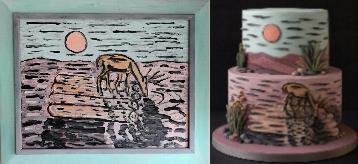
Cake Walk This Way: SD Art Prize Cake Walk
Do you like to bake cakes? Do you like to eat cakes? Do you like art? If yes, to any of these questions, then San Diego Visual Arts Network EAT YOUR ART OUT, event is perfect for you. Join us for the 2026 SD Art Prize Cake Walk. ORDER YOUR TICKETS NOW. Above is an example of art prize recipients from the past years and cakes that have been design inspired by these impressive artworks If you are a baker, amateur or professional, or if you just want to see and eat some cake PLUS get to see the entire Poteet Art Collection in Del Mar, then please sign up for this event on Sunday, August 9 from 3 to 5 pm. . Read More
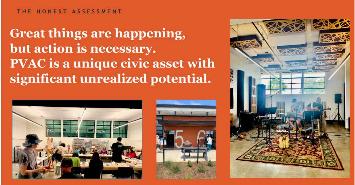
Pacific View Arts Center: New Direction
Recently the Encinitas Commission for Arts was tasked with presenting a white paper on a new direction of the Pacific View Arts Center. Katy Fox, commission chair, shared the document that the ad hoc committee ( Katy, Vice Chair Carla Roemer and Commissioner Vicki Campbell) and you will be delighted to know that I have summarized the 19 pages into one page but click the link to see the power point presentation about half way through. But I have added a few sexy suggestions to liven up your view of what this cultural hub in North County could become.
Pacific View Arts Center (PVAC)n has strong potential but remains underused and underrecognized. The report recommends transforming it into Encinitas’ creative cultural commons through a clear identity, vibrant placemaking, accessible creative opportunities, support for local artists, strategic programming and marketing, and sustainable leadership and funding—so it becomes an essential part of community life rather than simply a place to take art classes.
Wouldn’t it be great to see some of the local arts stars of Encinitas featured at the center, maybe through a lecture series, or art lessons based on their work. Read More
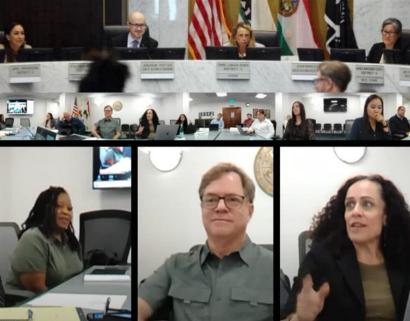
What you need to know about the new San Diego County Arts and Culture Funding
Although our District County Supervisors from District 3 and 4 say there is no relationship, May was a month when attention for funding for arts and culture shifted from the lack from the City of San Diego to the abundance for the County of San Diego.
In a stunning announcement and vote, $2.75 million was proposed by Terra Lawson-Remer and Monica Montgomery Steppe and granted to the arts to be administered by the County Commission of Arts and Culture led by their chairman Jim Gilliam. This includes $2.25 million each year through 2031.
This County Commission has been working for 3 years toward getting funding so that they can move from being an advisory commission (the usual role of a county commission) to taking on more staff and programs. It would be wonderful if we truly had a supportive County Arts Council/Department like most countres that value the arts and partner with the State Arts Council.
The County Art commission is instructed to direct the funding in the following way:
• $1 million annually for direct artist grants
• $500,000 for affordable creative spaces
• $250,000 for artist residencies within County departments
• $250,000 for binational arts investment in the San Diego–Baja California region
• Creation of policy for Arts & Cultural Districts, with no funding but hopes for money from private sources.
• A one-time $500,000 investment in the Black Arts & Culture District
We have seen a strong trend to support individual artists since the pandemic. San Diego gave out funding as a sort of WPA type of program from the California Arts Council. Private money was forthcoming to buy $1 million worth of art directly from artists. The new Artists Count program is directing forty-two $50K grants to be awarded later this year. Now there is another $1million for artist grants. We are all hoping this encourages our talent to stay put in San Diego County especially if there is the chance of more affordable live work spaces.
There is currently one full time administrator at the County Commission, Christina Jones, but there is money to add staff especially to handle PR, marketing and workshops for the artist applying for these monies. Some of this will be contracted help to begin with.
As of this report, the City of SD budget has been dropped from $13.8 million to under $2 million. Both the City ($146 million) and the County ($360 million) both have budget deficits. But the arts bring huge financial revenues ($10 billion annually) to the county and it is short sighted to eliminate this source for public health and youth opportunities.
Grant Oliphant, CEO of thePrebys Foundation reminds us, “… experience tell us that when cities retreat from investing in arts and culture, they don’t just trim “excess.” They undercut economic growth, community connection, quality of life, and civic identity.” The arts are not a luxury.
We certainly thank Chair Supervisor Terra Lawson-Remer and Vice Chair Supervisor Monica Montgomery Steppe and wonderful staff for their leadership and vision, and to Supervisor Paloma Aguirre for carrying the vote.
National History Museum vs. Science Museum vs. Museum of Art
Serendipity plays a big part in the writing of these blogs. Today is a good example of that. My husband does computer repair for a lovely woman named Shirley C. Strum. Dr.Strum is an expert in olive baboons and spends part of every year in Africa studying them. She is Professor of Anthropology and Professor of the Graduate Division, School of Social Sciences at UCSD and Executive Director of the Uaso Ngiro Baboon Project in Kenya. Last year her second popular book came out, Echoes of Our Origins: Baboons, Human, and Nature. She gave us a copy of the latest book and I found it fascinating. I am not going to go into any details about it except to say that Dr.Strum is a creative, out of the box thinker, rigorous in her research and quite brilliant. I highly recommend the book.
The question this book made me ask in its latter chapters: what is the difference between Natural History and Science? I am buried deep in the visual arts and it had simply never occurred to me to think about this. Although I have visited the San Diego Natural History Museum and the San Diego Science Museum and written numerous stories about both in the past, I never really thought about why Natural History was just not part of Science and vice versa. Why were there two buildings to house these subjects?
This was an easy Google fix: “Natural history is the observational study of organisms, environments, and natural objects in their natural environment, often focusing on description, classification, and "what" is happening. Natural science is the systematic, experimental study of the physical world, aimed at discovering general, reproducible laws through testing and analysis. This includes biology, earth science, atmospheric sciences, .oceanography, planetary science, chemistry, physics and astronomy.” In other words, one is observing, the other is experimenting. Of course, you need both, but I did not know the relationship has been rather a rocky one because of human egos.
As an artist married to a physicist, you would have thought this topic had come up. I know that the arts are not just storytellers, recorders of events, emotions, trends and topics. The arts are harbingers and thus are making hypotheses about the future. One is not better than the other. They live in harmony, just as he and I do.
In 2014, the SDVAN project The DNA of Creativity gave four grants for art and science projects. The most relevant to this article are probably Urban Succession (preserving wildlife in urban settings through artist constructed habitats)and Sea Changes: Act (a project featuring climate change, plastic pollution, acid seas, and dwindling fish populations and offering emotional motivation to create changes in these areas affecting our oceans ). But all four projects were tasking the artist involved not to just be story tellers of scientific experiments, but encouraged artists to be creatively involved in the same way that scientist were innovative. The other two projects were as equally guided to this end. SD View Art Now (a smart phone app to locate local arts events near you) and PAMM - PolyAesthetic Mapping: The Muses (ways to think about assessment criteria and the collaborations that artists and scientist might experience).
I write about all of this as Dr. Strum’s book left a lasting impression that there are things we can and should be doing to determine our evolution. And when I say “our” I mean the entire world. How do we co-exist, not dominate. How is there a place for experimental behavior which might carry us forward, but also an imperative for order, compassion and trust that stabilizes our civilization?
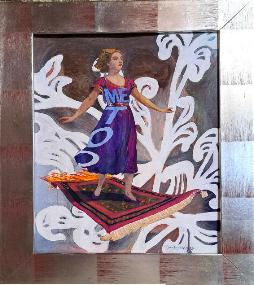
A Day in the Life of Patricia Frischer (as might be reported by Dorothy Parker, if she had AI)
• 6–8 a.m. – I wake early, though I refuse to rise before eight on principle. While the rest of the world rushes toward productivity, I conduct bed exercises and read a mystery on Libby. I heroically resist Instagram scrolling, which has the curious ability to devour sixty minutes in three bites. Messages on text, WhatsApp, and Instagram are inspected periodically—one must keep abreast of modern gossip.
• 8–10 a.m. – Breakfast is yogurt with chia seeds and fruit, which sounds healthier than it feels. On chilly mornings I sit in the sun with The New Yorker. I read the art pieces, the cartoons, and anything else that seduces me before my tea get cold. After that comes the ordinary theater of civilization: dressing, makeup, and persuading the bed to look less like a crime scene.
• 10 a.m.–noon – The email avalanche arrives—60 to 90 notes, all demanding wit, diplomacy, or patience. I answer questions, remind people to list on SDVAN, and occasionally pretend I will get around to my own art career. I have two exhibitions this year, both featuring my Paper Protest Dolls. Invitations to juror shows are declined (mercilessly); invitations to sit on panels are accepted (foolishly). Running the San Diego Art Prize consumes hours with artists, selectors, writers, committees, catalogs, lesson plans, videos, and social media approvals. It is a miracle I remember my own name.
• Noon–2 p.m. – Sometimes I attend a County Commission for Arts and Culture meeting on Zoom, where I raise my digital hand and contribute my two cents—an amount that, if compounded, should soon be worth a dollar. I root enthusiastically for their success.
• 2–3 p.m. – Lunch with my husband Darwin, the day’s principal meal and often its happiest. Leftovers become stir-fries; his chili becomes my chili-mac. There is always salad. Desserts, if they survive dinner parties, are reincarnated as truffle balls dipped in chocolate. One per day keeps decadence respectable.
• 3–4:30 p.m. – A meeting of the North County Arts Network, where I serve as chair. We discuss art, culture, creativity, and how to encourage the entire county to notice them.
• 4:30–7 p.m. – If daylight allows, we attend an art opening. San Diego offers so much art that choosing among it feels like turning down suitors. I arrive early, take photographs before crowds obscure the view, and later write reports for the Picked RAW Peeled blog.
• 7–9 p.m. – The dull but necessary acts of adulthood: laundry, dishes, scheduling doctors, taxes, nonprofit paperwork, accounts, websites. Glamour, thy name is paperwork.
• 9–11 p.m. – Television murmurs in the background while I work in the studio. Mysteries, cooking shows, or anything funny will do. With my hands busy I make art—Paper Protest Dolls or decorated sheets that become greeting cards. No two are alike. Glitter is welcome. A girl must sparkle somewhere.
• 11 p.m.–2 a.m. – The late shift: more emails, editing photographs from exhibitions, posting videos to Instagram (which apparently prefers motion to stillness), researching the shows I’ve seen, and writing blog posts while the impressions are fresh. If sleep interrupts the process, the morning usually brings the missing thought.
Not every day looks quite like this—I pace myself when possible. I celebrate occasions, adore champagne, attend weekly yoga, and walk with Darwin to collect fallen limes from the alley so he can make an excellent whiskey sour. I employ a cleaner and a gardener because my back has begun filing complaints.
Life also includes the occasional drama: a sick friend, a leaky roof, a confused bird trapped in the living room. But as a fully volunteer arts organizer, the days are never empty.
I try to do less. I suspect I never will.
After all, life is not a rehearsal—it’s opening night, and each of us insists on top billing.
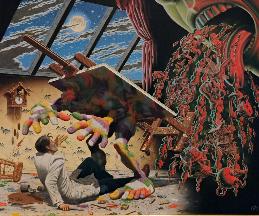
Robert Williams is Fearless Depictions at Long Beach Museum of Art
Because sometimes you just have to get out of San Diego and see something different...
This exhibition of Robert Williams is a wild ride. His images are hyper-detailed almost shockingly so. But that is because of the subject mater with is provocative, nightmarish and humorous all at the same time.
His career started in 1965 with designs for hotrods, but in 1967 he was working at Zap Comics. By 1994 he had started Juxtapoz Art and Culture Magazine. The 54 works in this show are all from 2007 to the present but although the look is of comics, they have no panels, no strips…they are all one compact image. This is a master draftsman merging fine art with a cartoon style.
A close look at these images, and you see a subversive personality. Read the complex explanation of the wall text written by Williams and you soon realize that the joy of making the image is paramount. He doesn’t really care what you think, or what the images even mean to him. I think the joy of letting it all lose on the canvas is what feeds him. The first images here are all about the artist who is creating and how damned they are. The next set makes fun of the fantasy of a perfect life and corporate greed. READ MORE

State of the Arts Jan 2026: Shifts and Drifts
For the last 6 months of 2025 and now in 2026, there have been lots of shifts in management in the visual arts institutions. But first a little reminder of the San Diego Visual Arts project coming up in 2026:
San Diego Visual Arts Network presents the 2026 SD Art Prize recipients Danielle Dean , Ingrid Hernandez , Tatiana Ortiz Rubio .. The exhibition will be held for the first time at Oceanside Museum of Art opening in Sept 19 from 5 to 7 in 2026 and showing until February 2027. Donate Now to Support the SD Art Prize KBPS’sJulie Dixon Evans reports San Diego Art Prize 2026 Winners: Three working mothers question what’s real and what’s possible (print and podcast ) and Video , Oct 2025.
The Business of Art Scholarship is a unique opportunity for an artist who has a body of work to showcase and is interested in selling their artwork during Mission Fed ArtWalk. San Diego Visual Arts Network and Mission Fed ArtWalk partner to select one emerging artist to receive mentoring, a booth at the festival and more. To apply, please fill out the application and submit along with at least five images of your hand created fine artwork to Sean Christensen , One scholarship recipient will be announced in early 2026.
Advocacy for the arts is one our our main concerns. Please remember the following ways you can have input.
The California Arts Council and their statewide series of Town Hall gatherings to gather broad and diverse input from arts and culture. San Diego Jan 30 th from 9 am – 12:30 pm at the San Diego Made Factory Register Here . Also, virtual online event for SD & Imperial Counties Feb 3 from 6 pm – 7:30 pm Register Here . We are featuring this on our homepage.
San Diego ART Matters is bringing back Creative Conversations and the first event in 2026 will be at the California Center for the Arts, Escondido on Feb 24 from 9 to 1 pm. The focus is The Arts in Rural and Unincorporated San Diego County . This information gathering meeting is free and in connection with the newly formed north county inland’s Art and Cultural Alliance which is the group formed by some of NCAN’s Fallbrook Advisory committee members. (Note: I am the chair of NCAN right now!)
It is worth re-reading my blog from earlier this year: A+ Art Blog by Patricia Frischer: SD County Arts and Culture Commission retreat Key Note Speech, June 5, 2025 Plus, Plus, Plus Arts Advocacy News
Now for shifts and drifts:
We are happy to hear from Terra Lawson-Remer’s office that “we deeply recognize that artistic expression, cultural practices, and creativity are essential to the health and wellbeing of San Diego County. The San Diego Arts and Culture Commission plays a critical role in both expanding opportunities and advancing equity through the arts.” Chairperson of the County Supervisors, Lawson-Remer was reassuring us that the funding for the staff of the commission would NOT be directed to any other environment issue (i.e. sewage problems in the TJ/SD River). We also want to acknowledge support from Supervisor Montgomery Steppe. . Thanks to all who came forward to stop this mistake. Nice to know we can rally and make a difference. You can watch a recording of the proceeding that took over an hour. Words from Arts Matters about the value of the arts start at minute 52 and include Lawson-Remer finishing assurances at hour 1.06.
Rachel Laing has become the new City of San Diego Assistant Deputy Director in the Economic Development Department, leading the City of San Diego’s efforts to cultivate a thriving creative economy. The arts in the city of San Diego are now under the department of Economic Development, perhaps one reason that Jonathon Glus moved to become a fellow at the Prebys Foundation with a remit to form a City Arts and Culture District with the help of the Downtown City Partnership .
Felicia Shaw has stepped down from the ED position at our leading arts advocacy organization for the county, SD ART Matters (SDAM), They have now appointed Bob Lehman as its new Executive Director. formally Executive Director of the San Diego Museum Council. Felicia Shaw new title is assistant Executive director of SD Art Matters. Bob and Felicia are also commissioners for the County Commission Arts and Culture.
Encinitas will be looking for a new arts manager of the cultural arts division of the City of Encinitas to replace Collette Murphy Stefanko, who has gone to a job in northern California. Luckily a recruitment company has been hired and this will be a national search. The application for new Arts Program Director is finally posted with a due date is Feb 22.
Alex Goodman , former director of the Brooks Theatre — Oceanside Theatre Company, has accepted the position as District Director for assemblywoman Tasha Boerner. Her district covers the cities from Carlsbad to Coronado. This gives us an incredible arts advocate at the state level. Be thinking about any ways this could be of benefit to the arts community suggests Jim Gilliam, chairman of the SD County Commission for Arts and Culture.
Sandi Landicho is the new Chief Financial Officer/Operations Officer of The New Children's Museum .
Jean Keane is the new Program Manager at The Front Porch Gallery in Carlsbad
Luisa Martinez is the new Assistant Director, Athenaeum Art Center in Barrio Logan
Dra. Inez Gonzalez is the Interim Executive Director Chicano Park Museum and Cultural Center (CPMCC) but they are still looking for a new Executive Director. You can apply online or directly email your resume and cover letter to director@chicanoparkmuseum.org . There is no hard deadline, apply as soon as possible!
Another shift in arts leadership: Lucy Eagleson, Executive Director,will be transitioning from her role at Arts a Reason to Survive . The ARTS board chair Tom Reise assures us the programs will continue uninterrupted. The former director of ARTS James Halliday has now taken the place of Allan Ziter at the NTC Foundation which is now known at Arts District Liberty Station. Congratulation to them on this state wide designation.
Kathryn Kanjo, The David C. Copley Director and CEO at Museum of Contemporary Art San Diego is stepping down to take up a position at UC Irvine and her replacement has not been announced.
Ceci Moss is stepping down as director of the Mandeville Gallery at UCSD. But no one will take her place. Instead, the art department will fill the space and it appears that will be mainly student exhibitions.
Sara Rodriguez is taking Carol Naegle’s place as the director of the Brook Theater Gallery in June, 2025.
Vanguard Culture has moved into a new office at UC San Diego Park & Market (Third Floor). But they will continue to hold events in county wide locations like Hera Hub, Carlsbad .
The CA State Cultural District grant project came back! With grants up to $10,000 over a two-year period, official state certification, technical assistance, and access to joint marketing and branding resources. But after a flurry of attempts at local applications, especially in North County, only Liberty Station became a new cultural district in San Diego County. We now have 4 (Oceanside, Balboa Park and Barrio Logan are the others).
Balboa Park parking : Bad news for everyone. We checked out the fees and the discounts are only for those living in the City of San Diego and not the county. So, if you do not live in the city, you will pay the full $10 for 4 hours or $16 a day in the closest lots to the Museum. You can park in Lower Inspiration Point for 3 free hours or $10 for the day and take the free shuttle. Otherwise, you pay at the parking meter kiosks on roads in Balboa Park for $2.50 an hour. No need to sign up and waste the $5 as that is only for monthly, quarterly or year passes or to register is you are a resident of the city. If you work for a non-profit in the park, you can park for free or if you have a disabled placard. Museums have noted a marked decline in attendance so far, as well as non-renewal of membership, even cancellation of birthday parties… In response, a petition has circulated, calling on city leaders to revisit the policy. Organizers say they plan to present the signatures to the San Diego City Council, requesting adjustments or exemptions to reduce the burden on museums, visitors and volunteers.
back to top
Archived A+ Art Blog
2025 past A+ Art blogs including:
The Gift of Giving to Artists
Exploring Art Therapy and Community Art-Making for Health and Healing
Support Your Local Artists
Unexpected Pleasures
AB 812 Affordable Housing for Artist CA for the Arts Tool Kit
Arts for Healing is now ready for Social Prescribing
SD County Arts and Culture Commission retreat Key Note Speech, June 5, 2025 plus Arts Advocacy News
ART Without Borders
Art Reach and Business of Art Scholarship at Mission Fed ArtWalk
San Diego Visual Arts Network: Sharing our Mission
Improving the Process for Public Art for the County of San Diego
2024 past A+Art Blogs including:
How the Arts in California could be affected by the recent election
And the Pendulum Swings: How the election results of 2024 will affect the arts
Carol Rogers: How the Arts helped me find community
The First City of San Diego Cultural Plan
Arts Prescriptions
What is your vision? What is your passion?
Patricia Frischer State of the Arts Advocacy, LIFE Lecture
State Funding Proposed Cut for the Arts
Public Art: A cry from the heart.
Affordable Housing for Artists in your Cultural Districts and Patricia Frischer, Woman of Impact 2024
Silent Conversations
Why weren’t we asked?
2024 State of the Arts
2023 past A+ Art Blogs including:
Legacy
Advocacy Issues for the region of San Diego , Illustrations by Keith Haring (Broad Museum)
Our Hats are Off to our Volunteers and Supporters
Diary of a Clearance Fiend, London, 2023
SDVAN/Synergy 20th Anniversary Celebration HATS ON!Black Women Artists in the Marketplace
California Creative Corp in San Diego
State of the Arts 2023- DEI, Money for the Arts and Women Arts Leaders
2022 past A+ Art Blogs including:
Partying with No Purpose
ArtsVote - Make Your Vote Count
Ayad Akhtar gives the Nancy Hanks Lecture and SD Design Week Collectors
What the NFT?
Uninformed and Not Stupid?
Summary of the New Ordinance for an office of Arts and Culture at the county level.
Support for the Arts at the County Level
How are the arts doing: Americans for the Arts Survey?
Arts and Culture Center for Encinitas
Gator Aid : An upcycle rescue story
State of the Arts 2022: Hurry up and Slow Down
2021 past A+ Art Blogs Including
SDVAN New Normal Cookbook: Eating Your Art In
Selling the Soul
California Creative Corps Pilot Program Development Update
A Red Letter Day with the passage of a proposal for a County Commission for Arts and Culture
The Blue Economy
Desperate Times
VAPA Asks: What is your superpower?
On the Occasion of our 200th SDVAN RAW Column
Simply the Best: A Step Too Far and actually quite dangerous!
A Tale of Two Learnings
Finger on the Pulse
State of the Arts 2021: San Diego Creative Industry by the Numbers
2020 past A+ Art Blogs including
Artist Guide to Surviving the Pandemic: 5 things you can do which will keep you working
Understanding AB 2257, Follow Up Legislation to AB 5, and Its Impact on the Arts Sector
Guiding Principles and Manifestos
San Diego + Imperial counties Regional Conversation Summary
2020 Brain Candy: A Virtual Salon Series – The Curators
The Power of Art Part 2
The Power of Art
It's Not Easy, Being Difficult
Remember when Corona was a Cigar or a Beer
Constance White at The Residency Project in Pasadena
The Role of the Arts in Defining Democracy
State of the Arts California, 2020
2019 past A+ Art Blogs including
Who wants to be a millionaire artist?
Immigration, Migration, Integration: SD Chinese Historical Museum
Isolationist or Globalist?
Ocular Artist
Birthing a New Art Organization
Three Things You Need to Know
Passport to Dance produced by Encinitas Friends of the Arts
Life Doesn't Frighten Me: Hope Inspired through Art at Fallbrook Library
The Cotwolds: Purton and Cirencester
Modern Couples at the Barbican
Great Big Indian Wedding: Cultural event that ends my year!
India: Monuments and Museums
India: Modern and Contemporary Art
Barnsley House Hotel and Spa
State of Mind, State of the Arts, 2019
2018 past A+ Art Blogs including
Politics and Art: Don't forget the we are human seeking connections
VOTE Like your life depended on it
Ten Reason to Support the Arts
North County Arts Events: Lux Art Couture and SD Botanic Gardens
Look at #Me,Too
Men on Boats at new Village Arts, Carlsbad until April 22
State of the Arts 2018
Outside Mullingar from the Oceanside Theater Co. at Brooks Historic Thea
2017 past A+ Art Blogs including:
End of Year NCAN Arts and Economic Summit Take Aways
SDVAN Giving Tuesday
Patricia Frischer: London Post Script 2017
Patricia Frischer: London Letter, Part 1, 2017
Patricia Frischer: London Letter, Part 2, 2017
Patricia Frischer: London Letter, Part 3, 2017
Patricia Frischer: London Letter, Part 4, 2017
Flash Forward at Oceanside Museum of Art
I matter
Desert X: a close by way to see large scale art
Off with the new, on with the old
Passing on a legacy
Empowering Advocacy
Walker Art Center, Weisman Art Museum in Minneapolis and The Broad in LA
State of the Arts/State of the Website 2017
I matter
Off with the new, on with the old
Empowering Advocacy
2016 Past A+Art Blogs including
State of the Arts 2016
What is the What of What
London Journal March 2016
Today San Diego, Tomorrow the World
1000 Words! Where is a picture when you need it?
Five trends in Social Innovation
August Challenges
Art of Science Learning Proof of Impact..The Facts, just the facts
Old Fashion or Out of Fashion
Annual San Diego Tourism Authority (SDTA) Workshop
Can Falling Behind, Put You Ahead
2015 Past A+ Art Blog including
North County arts Network meeting at CCAE in Escondido
True Collaboration Means Sharing Credit
Why San Diego needs an County Arts Council
Hobby Store Heaven
State of the Arts: Are these the Questions for 2015?
Scaling Up and Out: The changing audience for the arts
Spoiled for Choice equals a Guilt Free Art Life
Changes to the SD Art Prize
Naimeh Tahna Woodard: Queen of Parties and Art Supporter par Excellence
In Praise of Saying Thank You
Maker’s Spaces
Art Makes things Strange : Looking at and Talking About Art
Thankful for STEM into STEAM
Your Donations Make a Difference
2014 Past A+ Art Blog including
Mural by Paola Villasenor at SDAI and Art Fair Miami
Turn on, chill out and Pop up
Incubator for Innovation - final 9 teams for San Diego
London Journal 1: Tate Britain Folk Art
London Journal 2: Horst at the Victoria and Albert Museum
London Journal 3:Today's Special: Pace Gallery, Tate Modern Matisse
London Journal 4: National Portrait Gallery and Saatchi
London Journal 5: London Fashion Week and London Design Show at Tent and Super Brands
London Journal 6: Gilbert and George, Boyd and Evans, Anslem Kiefer and AI WEIWEI
A Call to Action
SD Fringe Festival Art Exhibition at Ten Street Art Center
ILLUSION: Nothing Is As It Seems at the Ruben H. Fleet Science Museum
Deborah DeLisi and One Minute Mandalas at SDVAN sponsored Mission Federal ArtWalk
DNA of Creativity Introduction at Oceanside Museum of Art
Notes on Aesthetics and Authenticity Symposium
SD Art Prize has its roots in the Turner Prize
2013 Past A+Art Blog including
State of the Arts: The Rise of the Living Artist, 2013
New Art at the SD Airportt: Flying High
San Diego Incubator for Innovation
Arts Leaders Motivations
Politics and Art in San Diego
Art Eats Food
Alternative Materials Panel Discussion - Sparks Gallery
London Art Newsletter 2013
Maximal
San Diego: Identity Crisis or Identity Opportunity? March 2013
Palm Springs Art Fair, Feb, 2013
Corporate Collecting Book Review, Jan 2013
2012 Past A+Art Blog including
Art of Science, Science of Art
Holistic Education
San Diego Steps It Up
Art Spaces for Art Places
Curated Exhibitons/OMA New Director
TED Speak: Introducing SDVAN View Art Now App
Augmented Realty
Big Art Big Bucks
Three Things You Can Do to Help the Art World
United Councils of San Diego?
Thank you to Dennis Paul Batt
New Horizons in SD Art
2011 Past A+Art Blog including
Is La Jolla coming back as a center for the visual arts in San Diego?, Dec 2011
Audience Engagement, Nov 2011
London Part Two, Oct 2011
London Part One, Sept 2011
Drink, Mate, Art, Aug 2011
Too Brave to Fail, July 2011
Out and About In June, 2011
Putting our Tax dollars to Work
The Birthing of Art Meets Fashion
DNA of Creativity
Los Angeles Contemporary Art Fair 2011 in under 2 minutes!
2010 Past A+Art Blog including
Best Tidbits for the Twelve MOnths of 2010
Katherine Sweetman has a home at SDVAN
Filling a Need
Collectors Take Note
Birthing Process
...And Three to Go
Willing to Fail
Life, Luck and Survival
Arting: are we consuming the right art?
Cliffnotes: One Month Condensed into One Week
Allison Renshaw Discovered
Dreams and Visions: MOvers and Shakers 2
State of the Arts 2010 - the Future of Art Publications
2009 Past A+ Art Blogs including
London and the Venice Biennial, 2009
Meet the Press
Beyond the Borders International Art (BTBIAF)
Interpersonal Theory of Art: Little & Large community phenomenon and the museum exhibition, Calder Jewelry at SDMA
Little and Large Launch
Little & Large Introduciton
The Recycling Buzz
Economic Realities for the arts in May 2009
Seven volunteer Inspried Visual Arts Projects
Snapshot – One women’s personal views on Changing Perspectives in the San Diego Art Scene: Notes from the panel discussion
The Economy and Affordable Live/Work Spaces
State of the Arts 2009
2008 Past A+ Art Blogs including
State of the Arts 2008
Hungry for Chinese Art?
Eat Your Art Out plus John Baldessari conversation with Hugh Davies
London Burning: A Damien Hirst Update
SD Flash Forward; Movers and Shakers Speak Out
Museum Trends: NY Times Cliff Notes
London Newsletter 2008
Art Collecting Clubs Part II
Artcentric Interiors
Poopielickles for All: attending Art Fairs in LA
Reading the Zines for Good Ideas, Feb 2008
Changing Power Base: State of the Arts 2008
2007 Past A+ Art Blogs including
Burnished by Fire: Stories of Firestorm, November 2007
The What and the How and the Wow, October, 2007
Careerist Artist, September, 2007
Non-Profit is not a Free Ride, July 2007
Crowd Control at Museums, June, 2007
May and It'sDarling Buds - May, 2007
Cruelty Free Art Zone - April, 2007
Critical Issues Facing the Arts, March, 2007 – The James Irvine Foundation, September 2006 summary
Letter from London Dec 2006 - Feb 2007
State of the Arts Jan 2007
2006 Past A+ Art Blogs
Crossover: How Artists Build Careers
Art and Wine Tour of Northern CA- October, 2006
Web Heaven- August, 2006 Advice on Websites for Artists
Vacation Art-July, 2006
Art Critic Revealed: Robert Pincus - June, 2006
Artistic Freedoms- May 2006
Art and Science, Progress and Mystery - April, 2006
Building Market Share - March, 2006
Glass to Go - February, 2006
Collectors on Show - January, 2006
PATRICIA FRISCHER, author of "The Artist and the Art of Marketing" has lectured extensively on marketing for artists. She is a trainer of artists’ agents, art dealers, consultant and collectors. Frischer has taken on the roles of gallerist, curator, writer, teacher, website coordinator and artist. Her many metamorphoses make her difficult to fit into any of the usual art world categories. She is a founding member and coordinator of the San Diego Visual Arts Network, (www.SDVAN.net ) which funds the SD Art Prize, directory and events calendar and SmART Collector features. Her own artwork (www.DrawsCrowd.com ) has been shown internationally and her most recent one person show was at Oxford University.
back to top or back to Archived A+ Art Blog
|





